
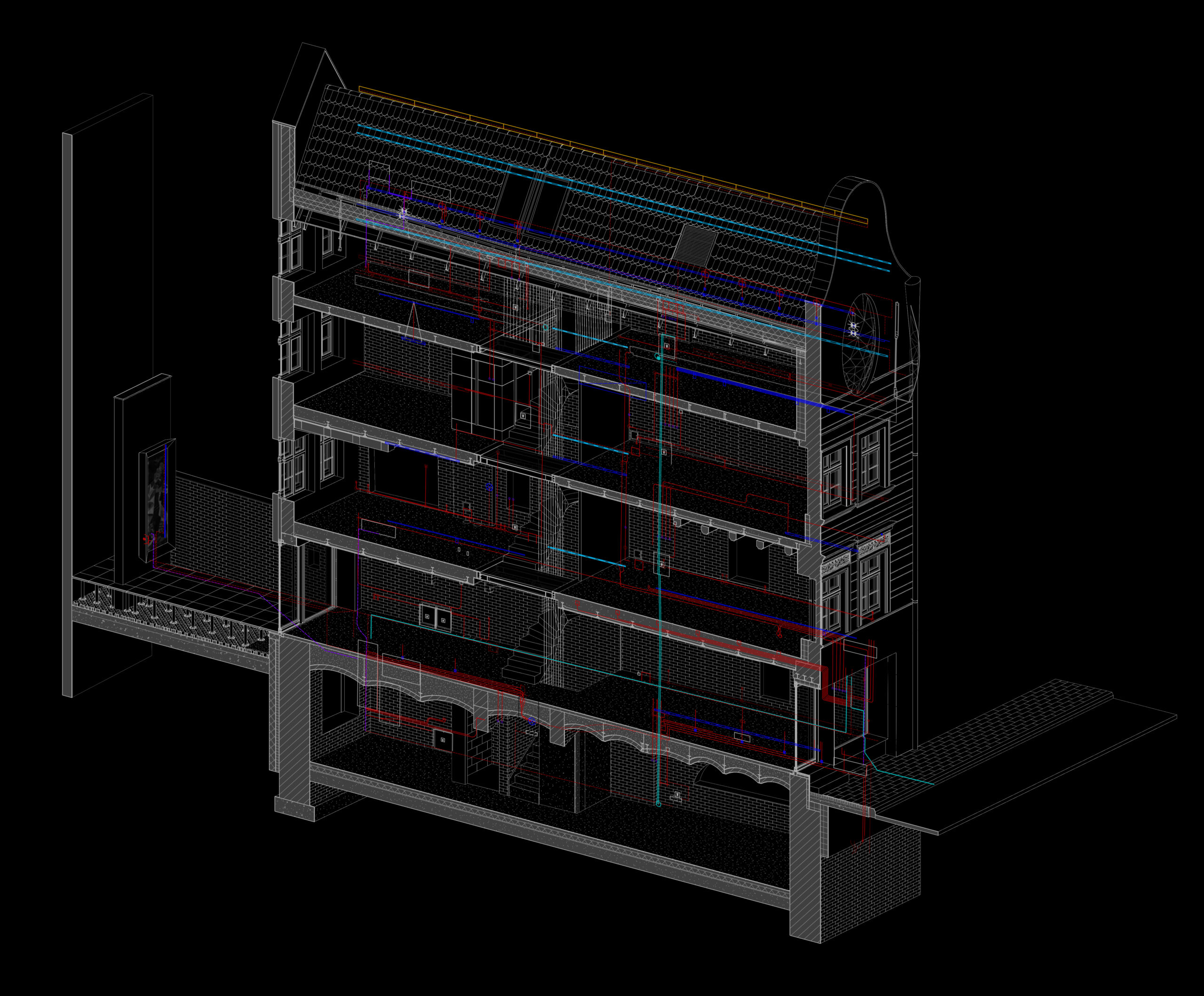
There are 28 technical systems in the building. We benefit from renewable energy sources to provide top quality climate comfort. Proper parameters of air in the house provide its protection against environmental factors which are harmful to its delicate historic structure, such as humidity or particulate matter. Energy consumption and air quality parameters are constantly monitored by BMS. The integrated system is based on the synergy of interrelated functioning of devices.

We care about health and comfort of occupants and guests at Wroniecka 23, that’s why we pay particular attention to air quality. We keep a very low level of particulate matter PM2.5 and PM10 and thanks to this, viruses have little chance to spread and infect people present in the building.
A staircase functions as a ventilation shaft facilitating air circulation in the house. There are two air handling units in the building.
Air is let in and out by individually designed intake and outlet anemostats.
Ventilators are equipped with anti-smog filters. There is also a recuperation-heat recovery system which allows us to maintain the proper level of CO2 and the lowest possible level of particulate matter and, at the same time, optimise energy loss.
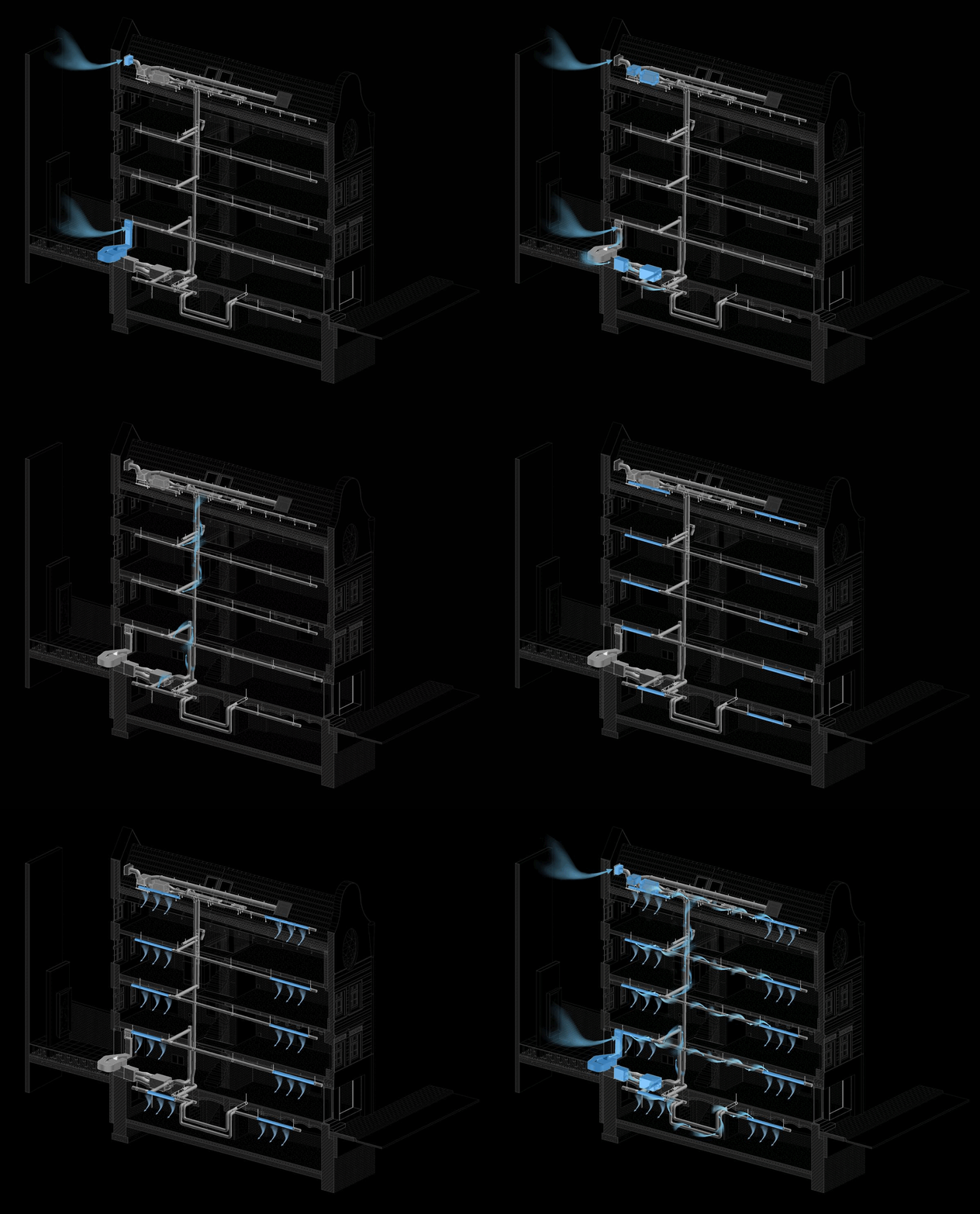
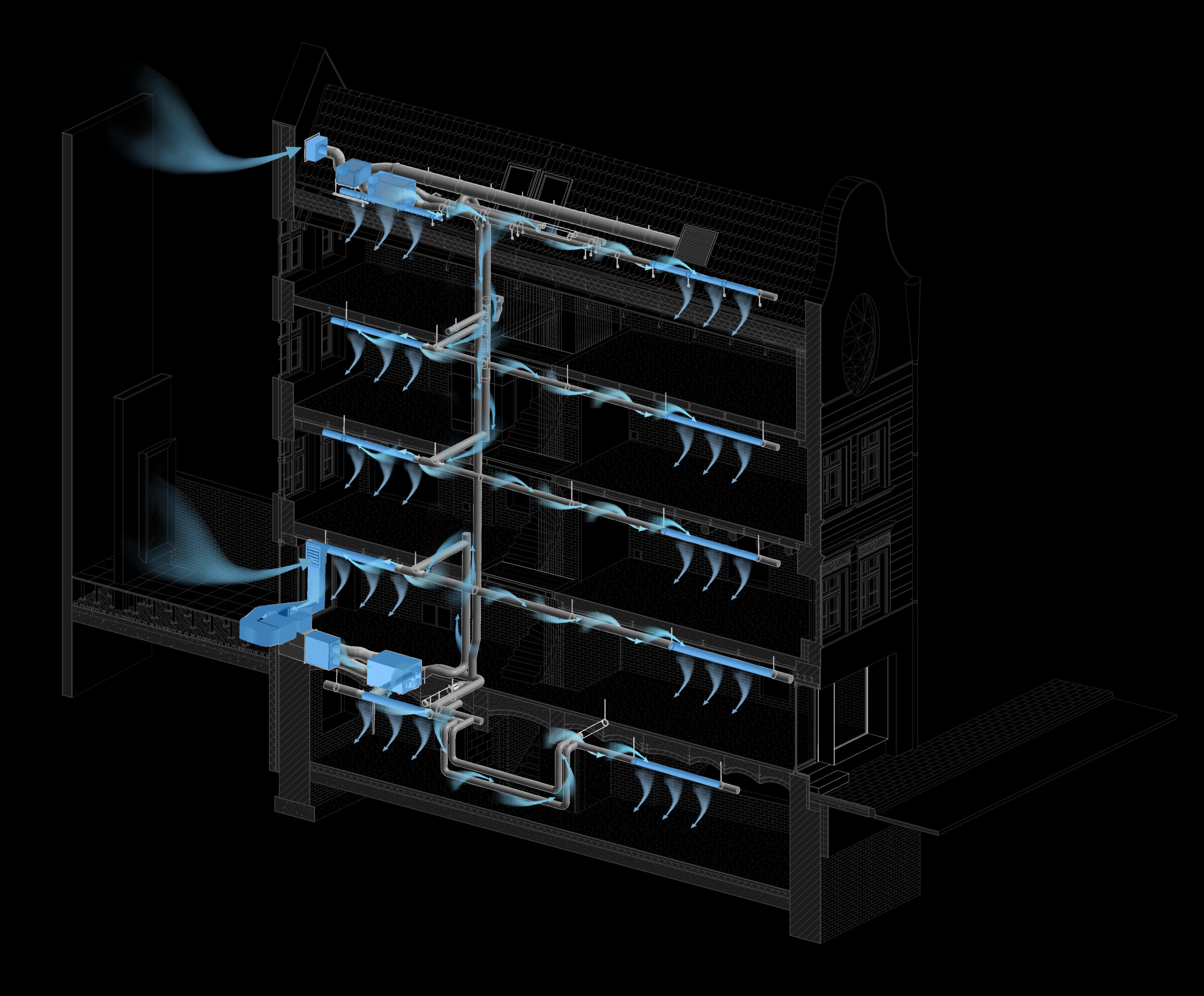
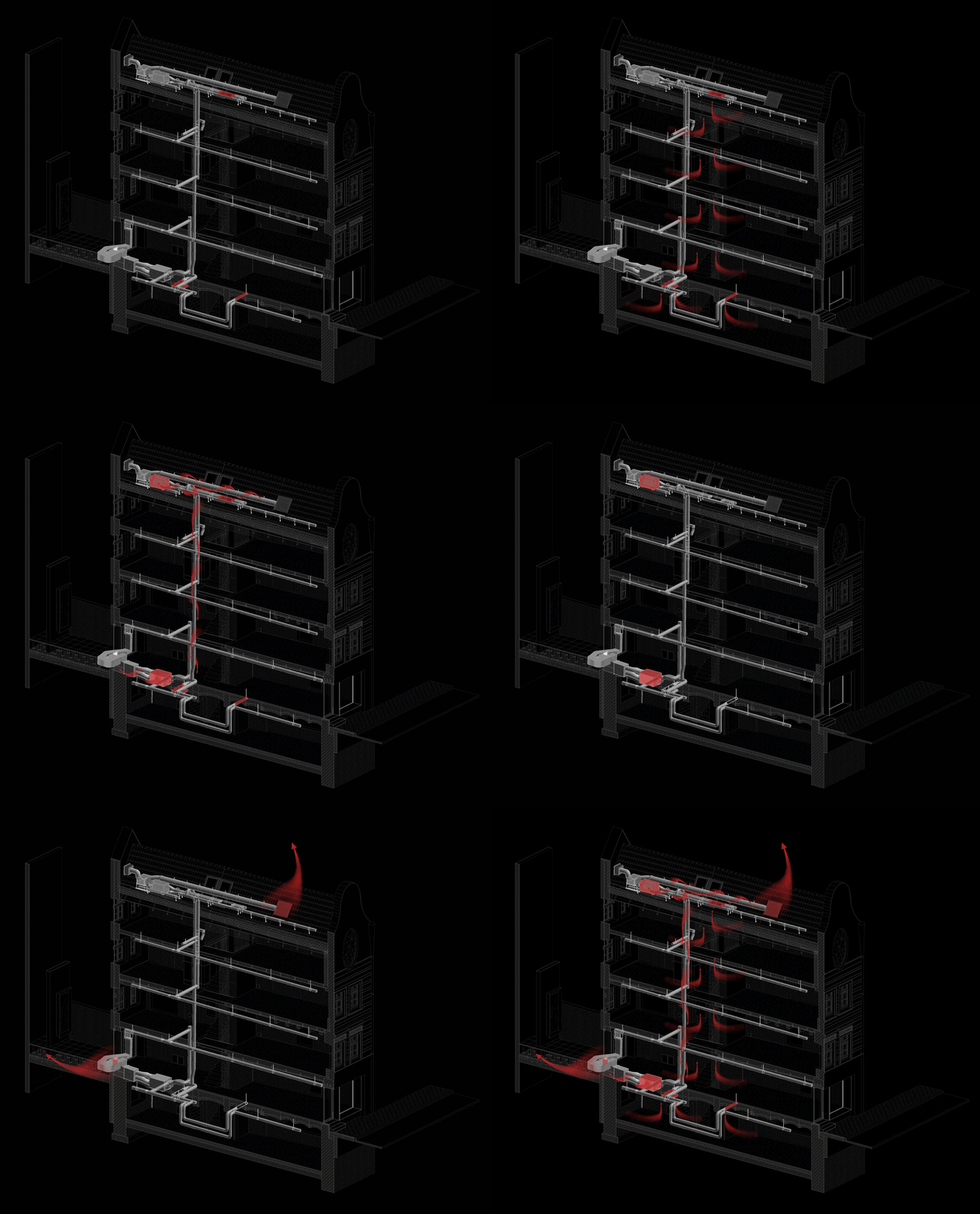
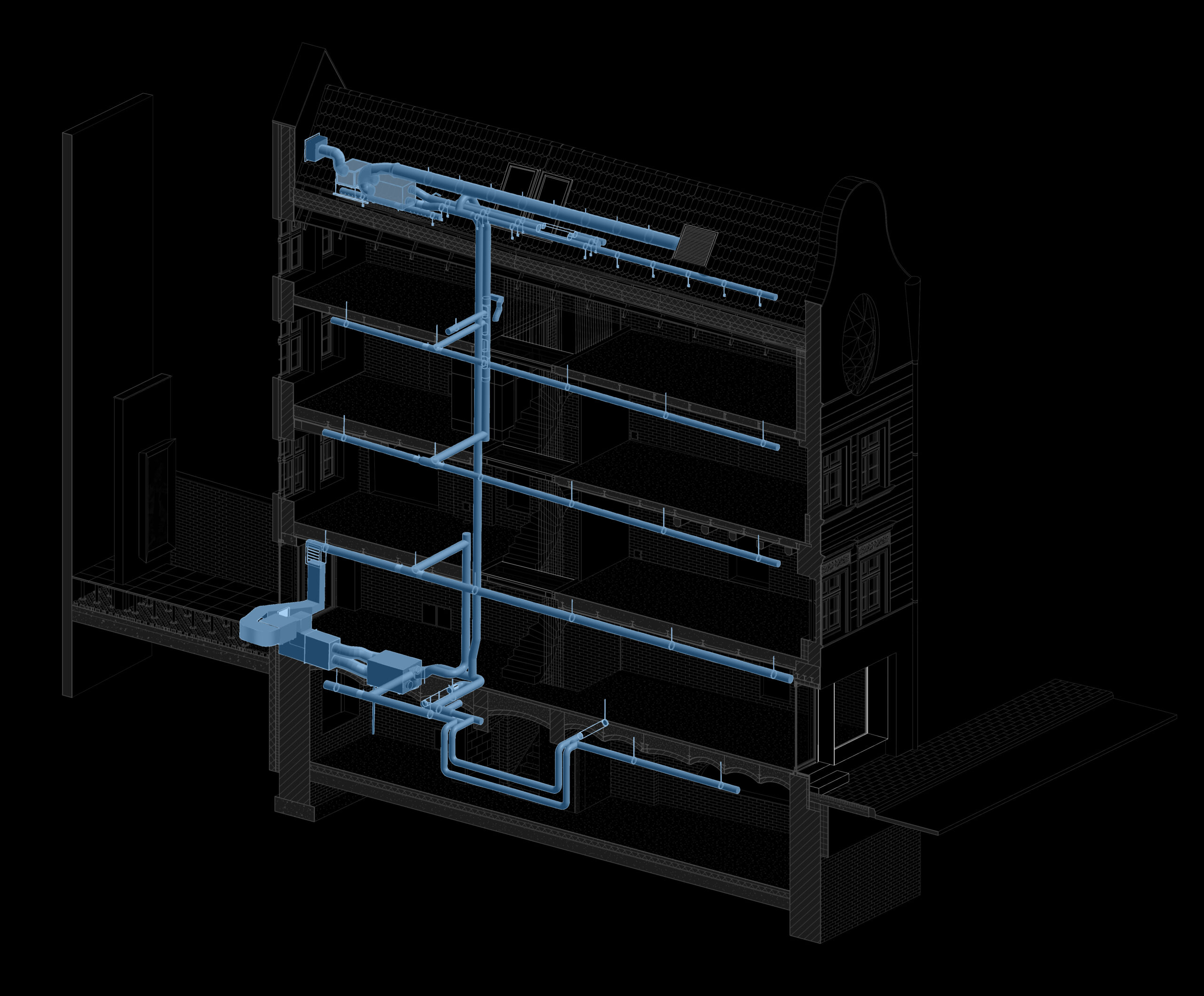
Climate comfort is one of the most important parameters guaranteeing comfort and efficiency of people working in the house. When we were designing heating and cooling systems in the building, we took into consideration climate conditions and issues of global warming.
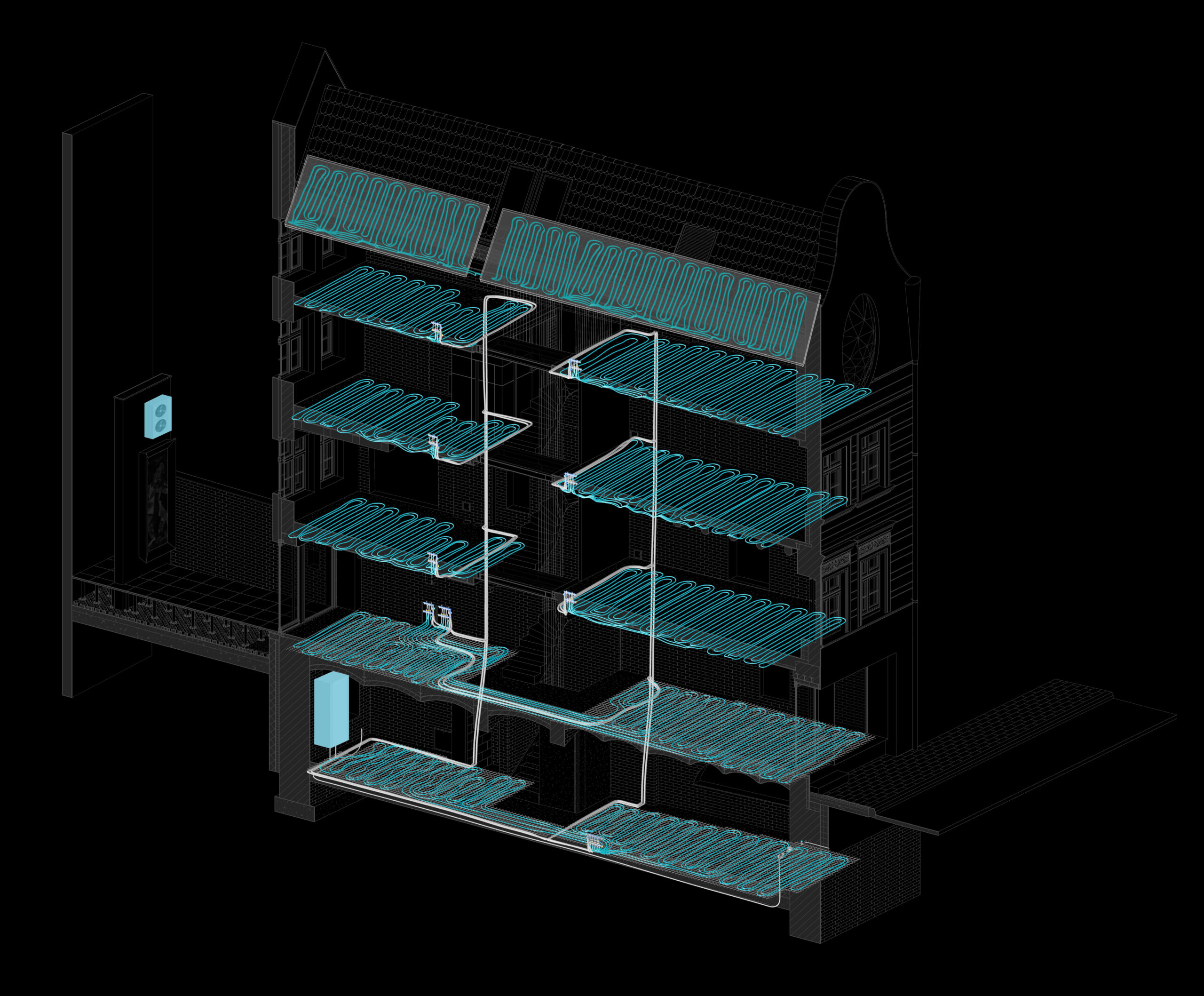
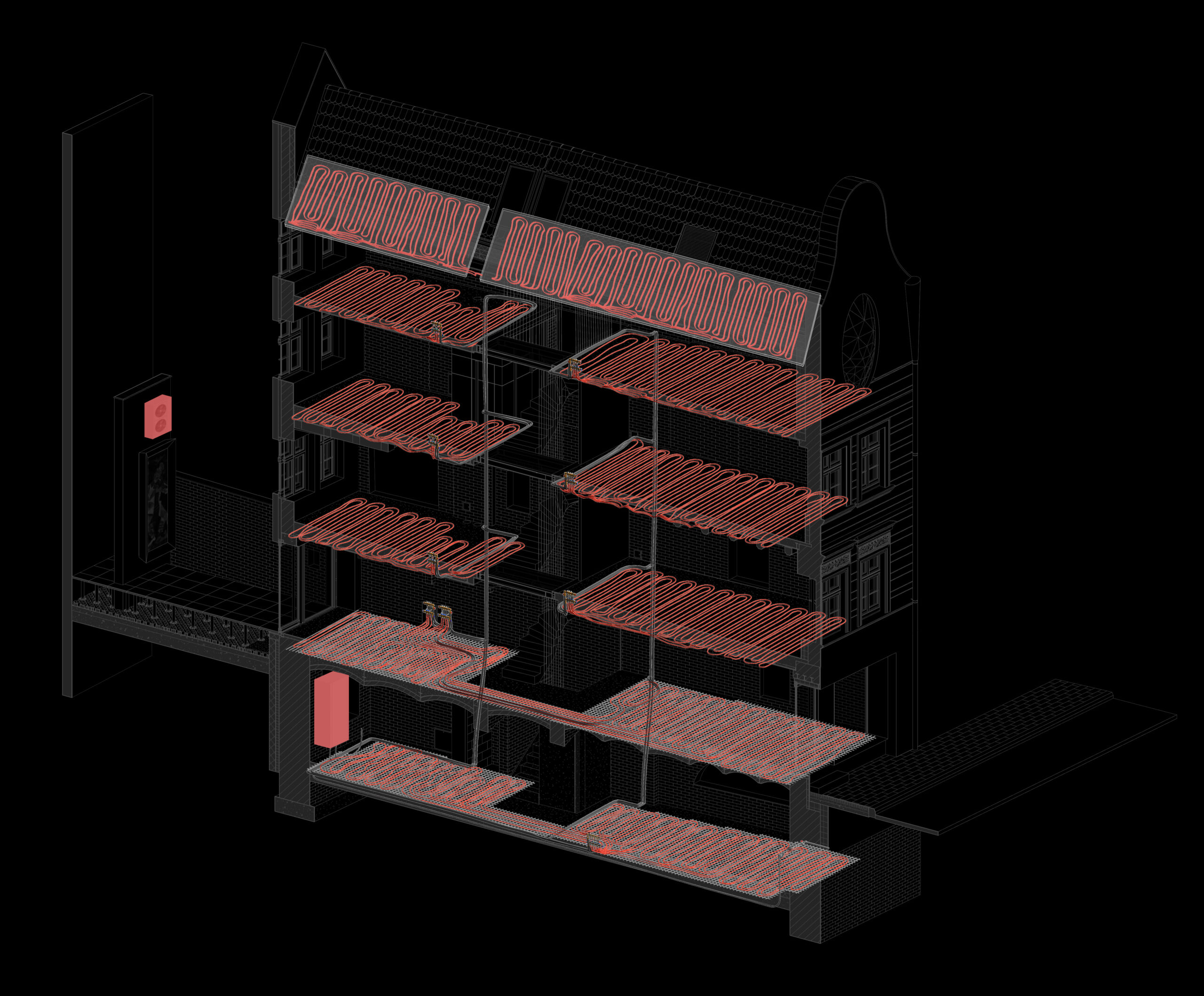
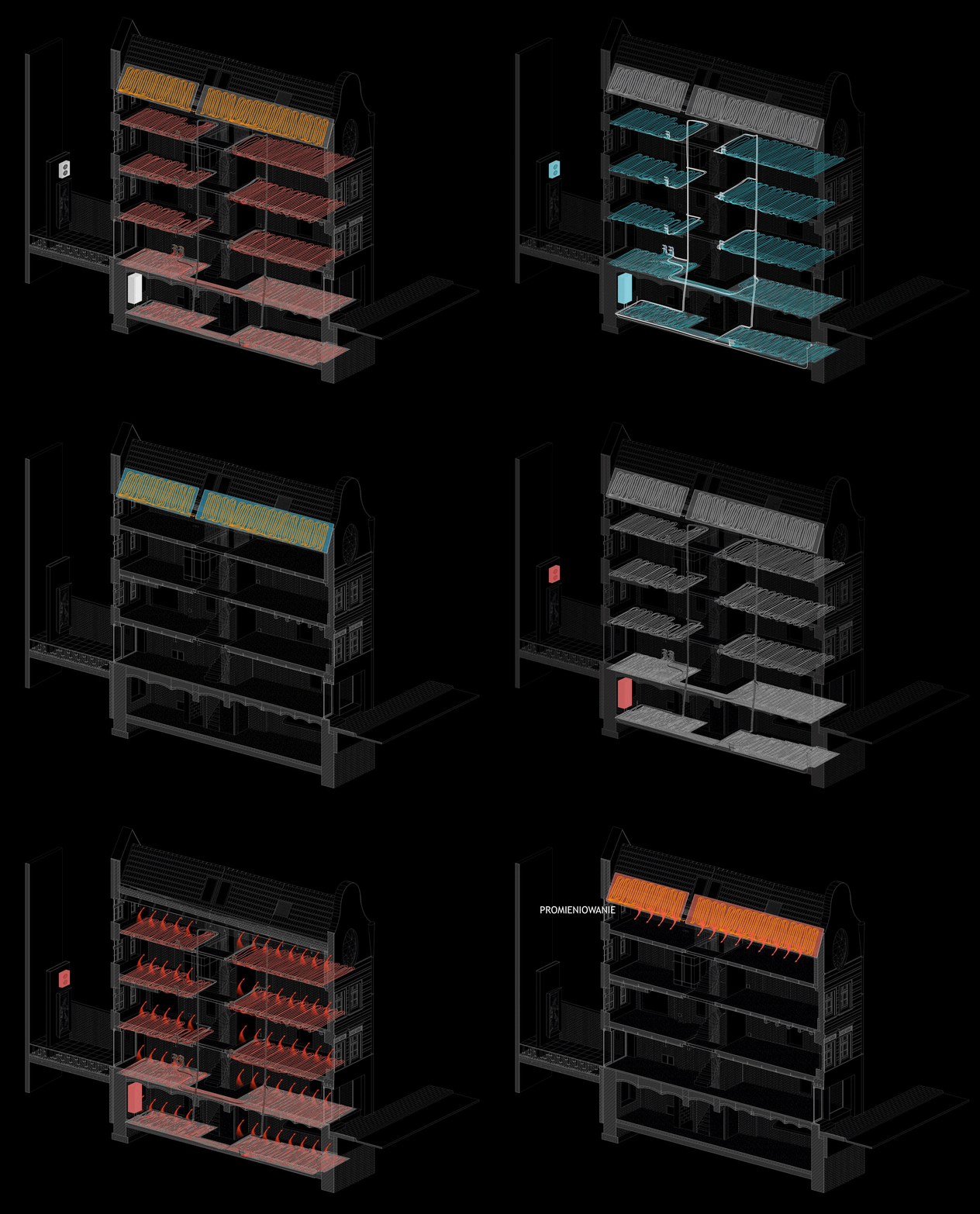
The comfort at Wroniecka 23 is provided by the system of heating-cooling floor slabs supplied by an air-to-air heat pump. Additionally, there are heating-cooling ceilings on the top floor and air conditioners on the ground floor and in the basement.
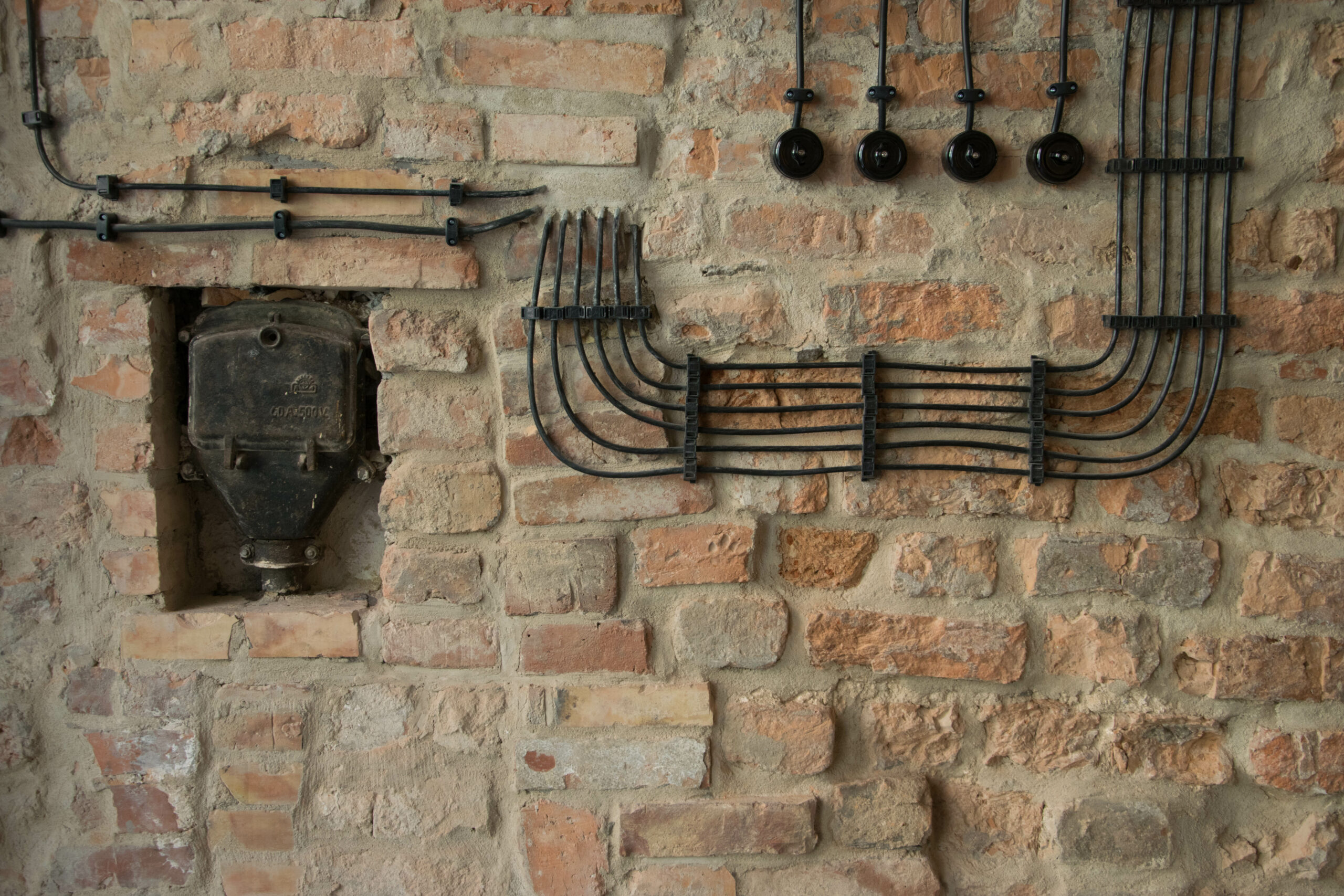
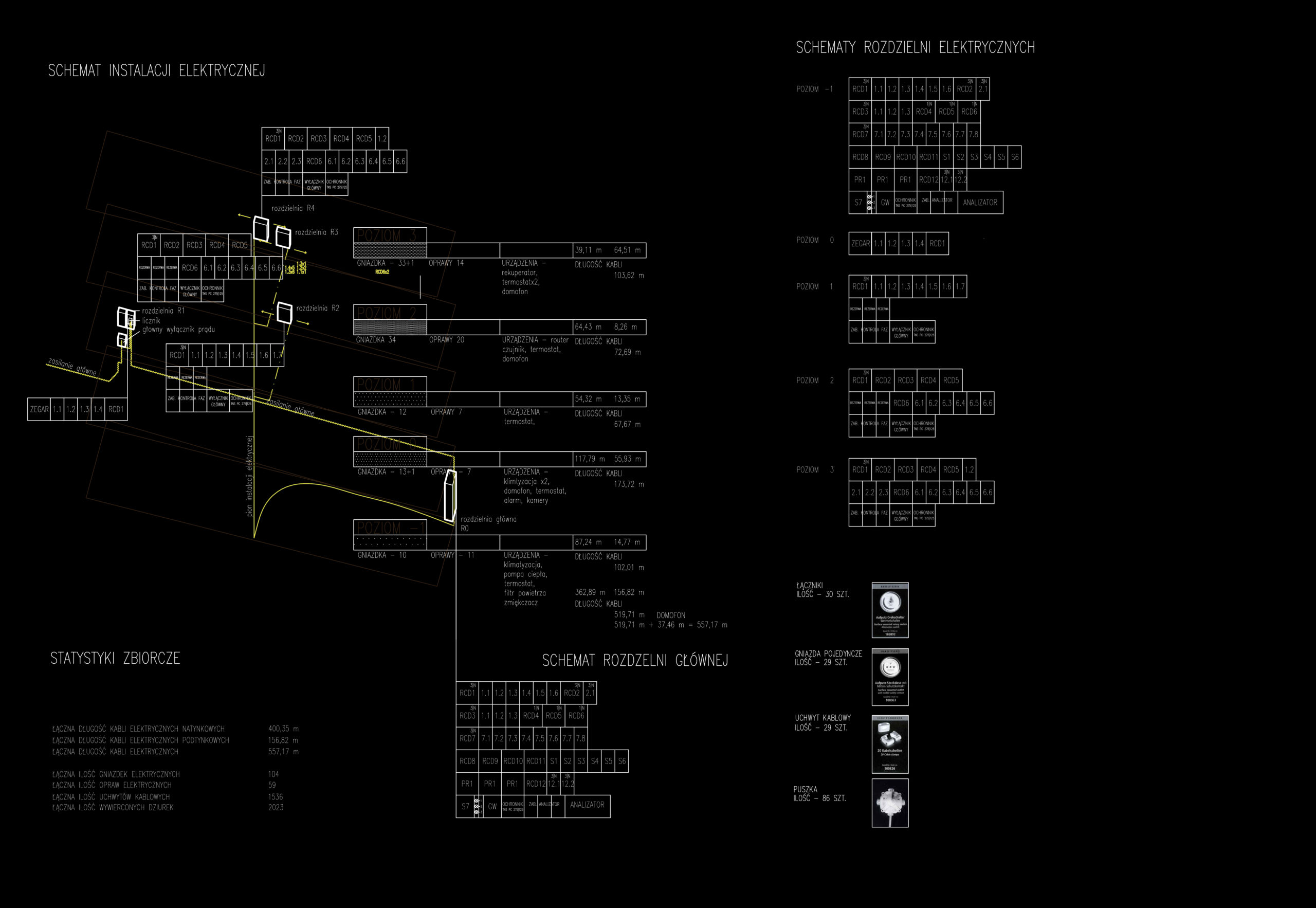
Elements of the power supply system are either fixed on historic walls or hidden in new construction elements. The complicated network of cables and wires do not harm the historic matter of the building and old bricks become a unique background for new systems. Fun fact: in order to meet all power supply needs of the studio, we had to fix over a kilometre of cables and drill more than 3,000 holes!
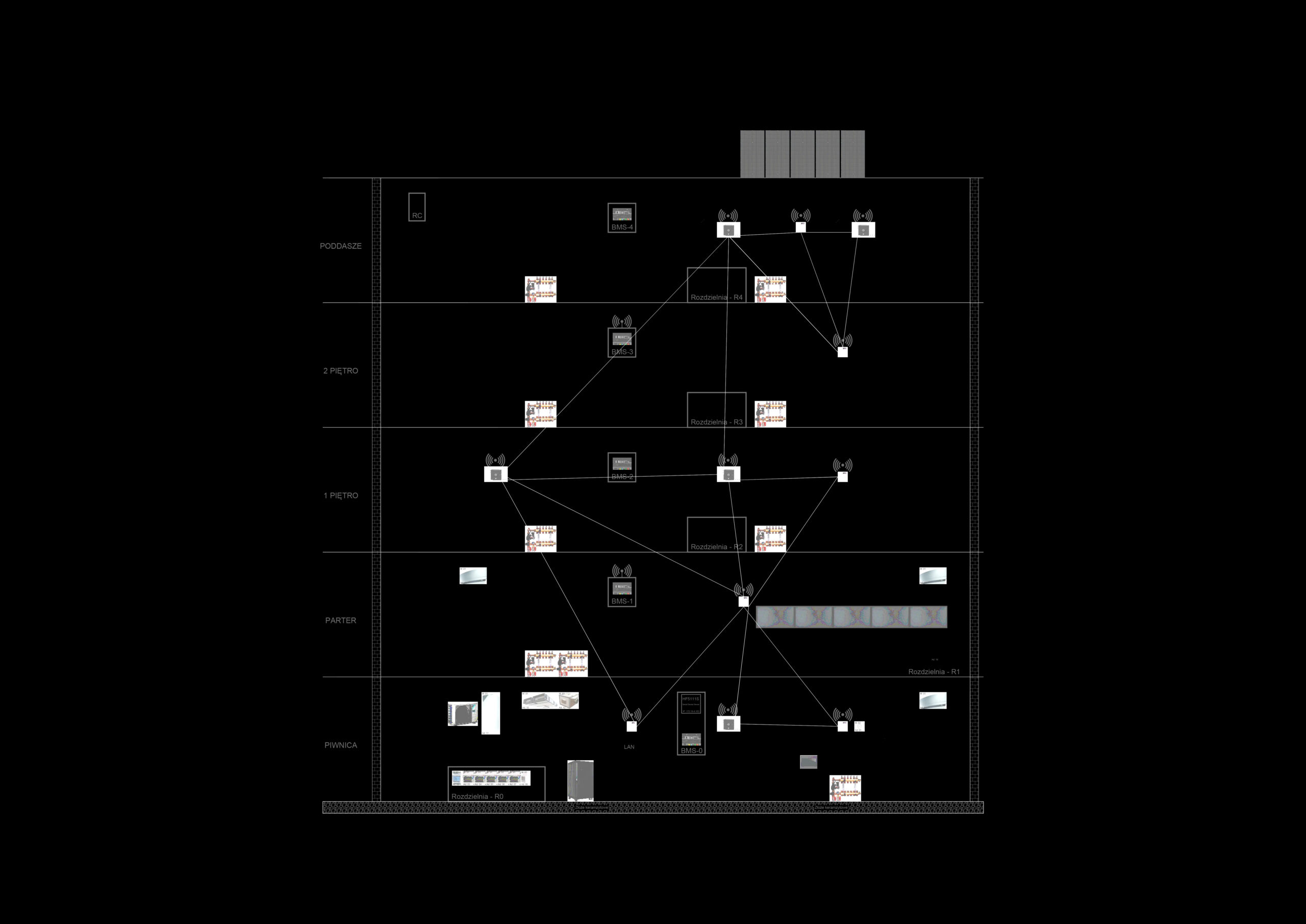
All parameters of air quality comfort and climate comfort are measured. We use BMS sensors for that purpose, both wired and wireless (MESH), which are installed non-invasively and equipped with multisensory converters of air quality. This solution gives the insight into various parameters in selected time horizons. The data are constantly measured and recorded and we can use them not only to optimise the work of the system but also for research and survey purposes.
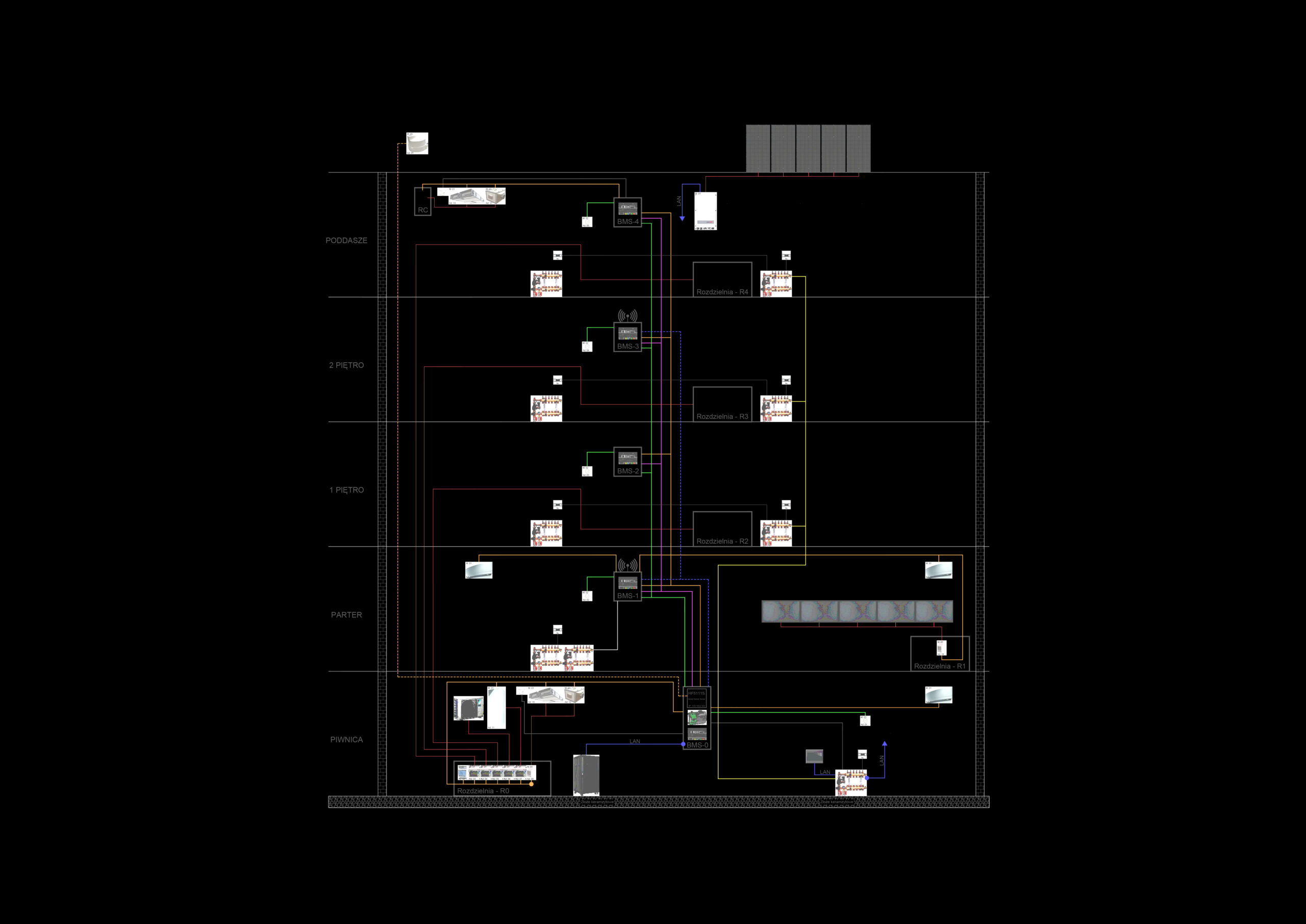
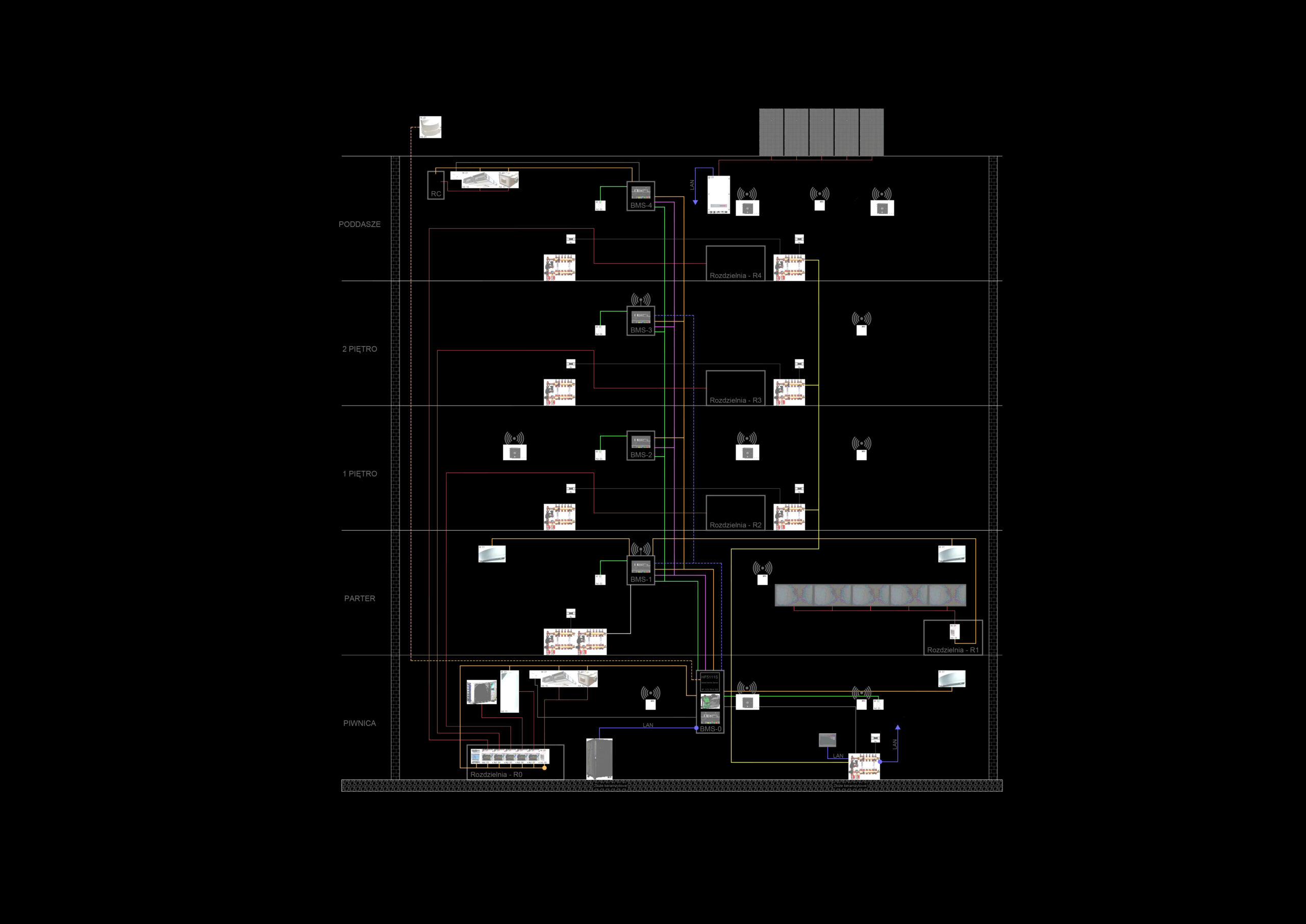
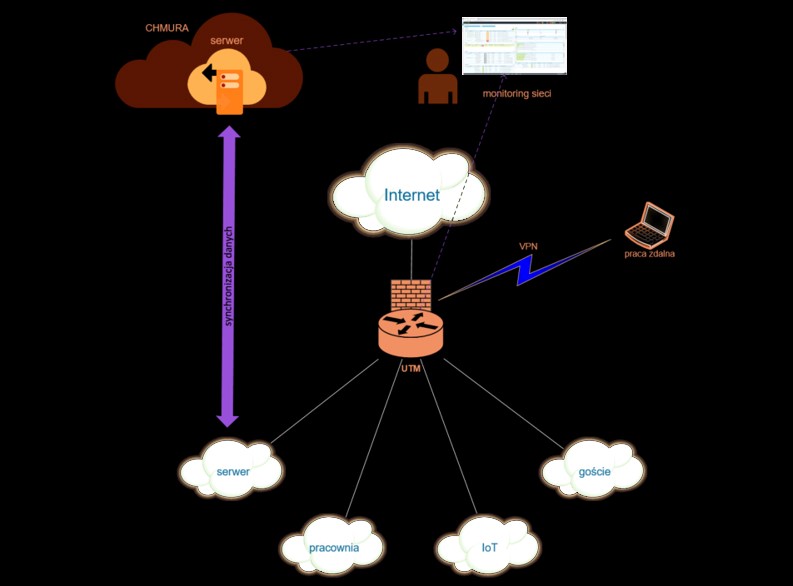
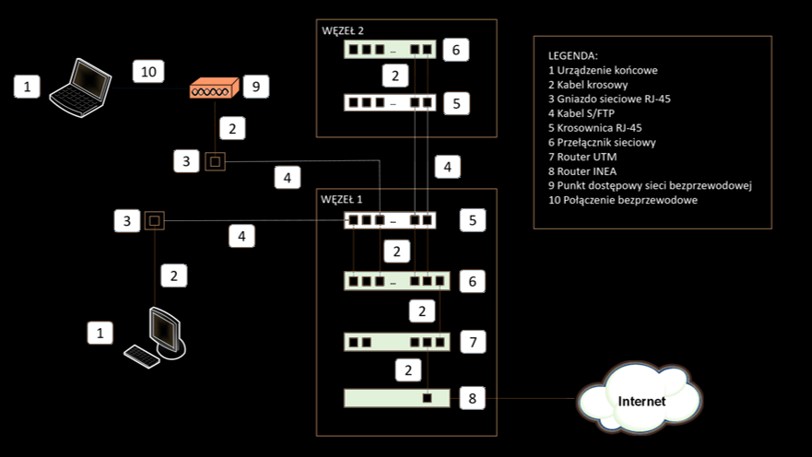
The studio has got its own server but apart from that, the data are also stored in the cloud. It allows us to safely archive and process data. IT system requires over 1,500 m of cables and includes 75 cable lines.
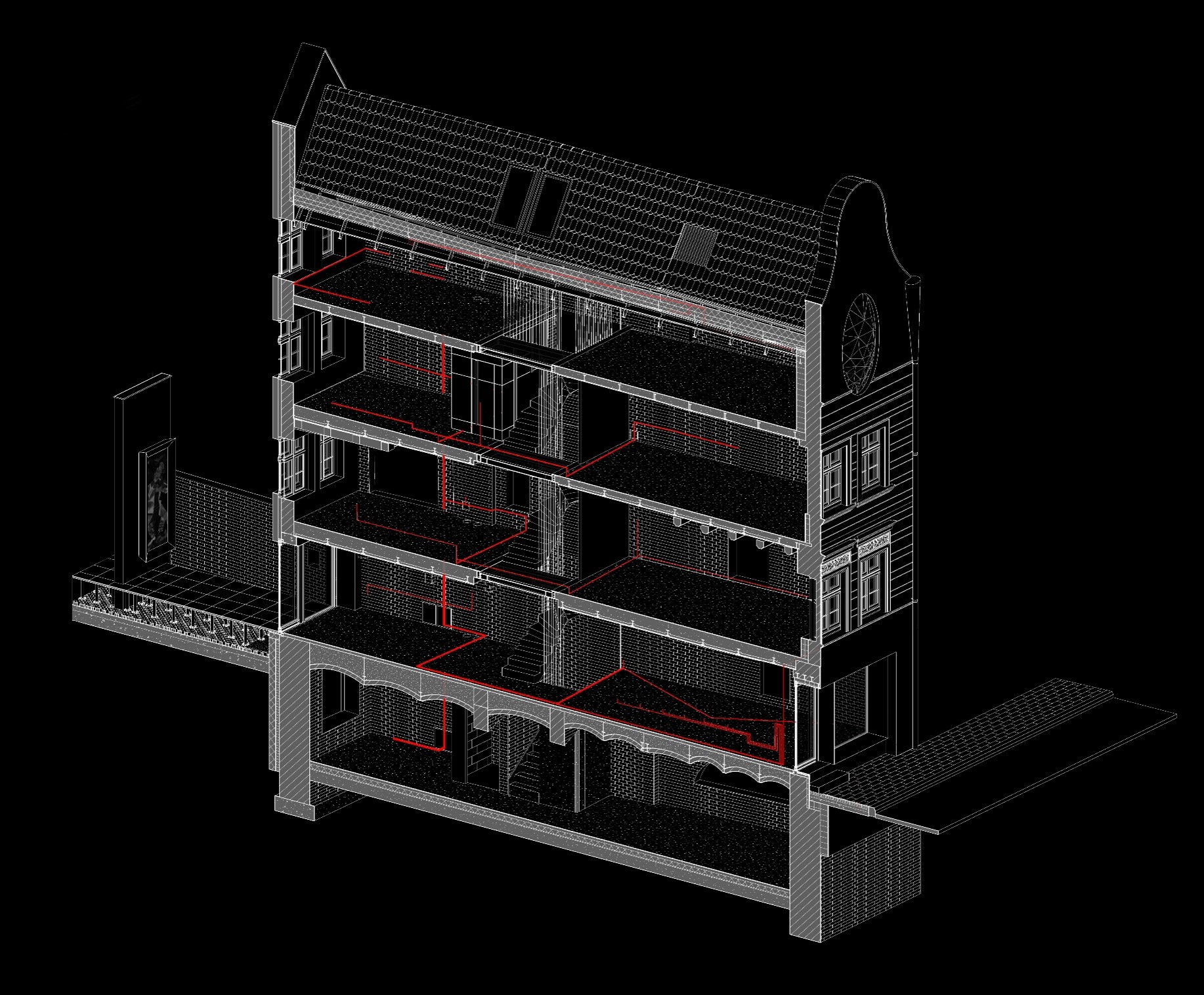
The house is equipped with photovoltaic panels and a heat pump. In case of those systems, our greatest challenge was to instal them in a historic building: it needed to be done in a way that allowed proper functioning on the one hand and did not harm the historic matter on the other. It was a difficult thing to do because the house is very irregular: it is narrow (its width changes, it is approximately 4.1 m), long (about 16.9 m) and tall (basement and four aboveground floors). That’s why we decided to instal the pump together with a buffer tank, which provides proper heat circulation up to the top floor.
Installing photovoltaics was limited by a small surface of the roof. It was only possible to instal 16 panels. Therefore, solar energy production is not sufficient to meet all the needs of the house but it significantly supports energy consumption and, above all, is evidence that even a centuries-old monument can become an environmentally friendly and nearly zero-energy building.