
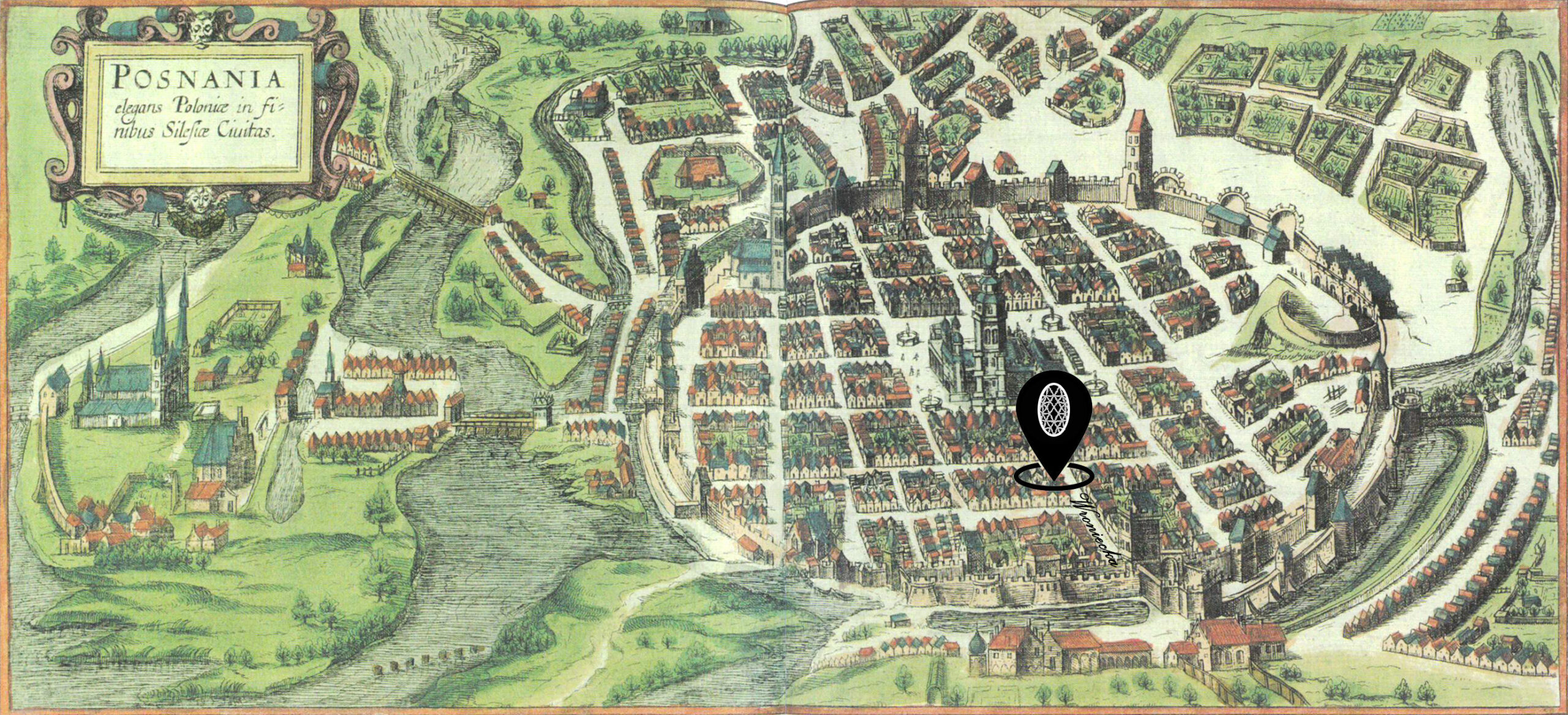
Wroniecka is one of the oldest streets in Poznań. It was marked in the mid thirteenth century and at that time, it linked the Old Market with Wroniecka Gate, which does not exist anymore but then it opened an important commercial tract to the royal city of Wronki. What is interesting is that the street was named Wroniecka at the very beginning, and has not changed its name ever since (except the time of the Prussian Partition – then it was translated into Wronkenstrasse, and during the second world war the Germans named it Shinkelstrasse).
The beginnings of the tenement house no. 23 are dated on the turn of fourteenth and fifteenth century. It was established on the basis of archeological survey of building’s foundations, conducted in 2017. Most probably, at that time the building had a bricked basement and one aboveground roofed floor.
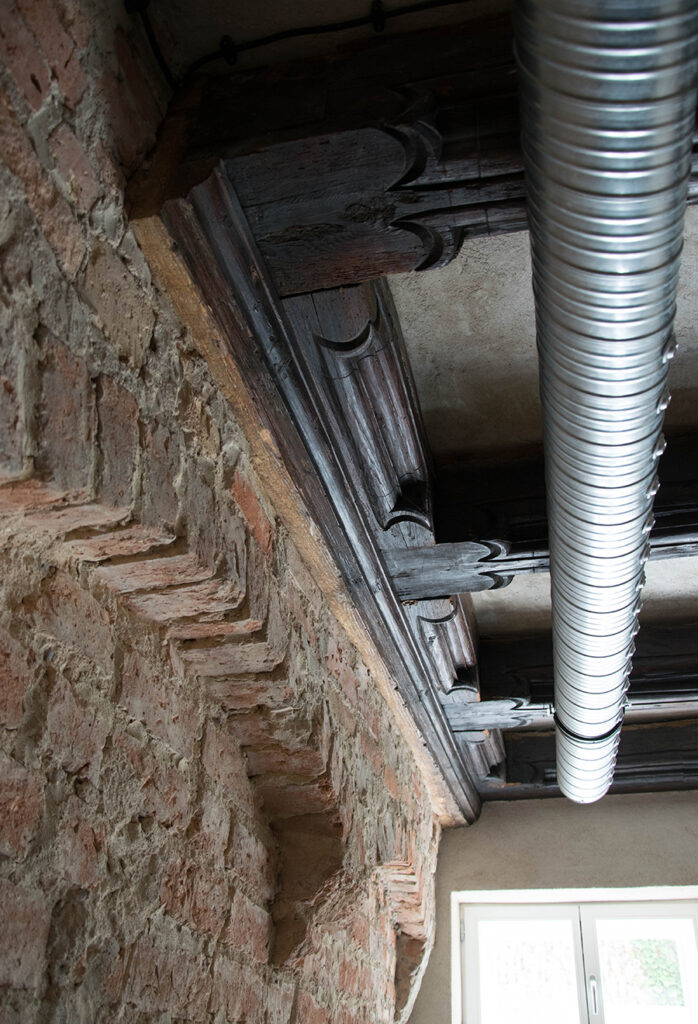
The building has been rebuilt and reconstructed several times in its history. In the sixteenth century, ceilings with profiled beams became popular. Such beams are still present on the first floor of the house at Wroniecka 23. The conducted chronological research proves that trees used to make those beautifully carved beams come from 1570 and 1591. It leads to the conclusion that it was the time when the house gained the first floor.
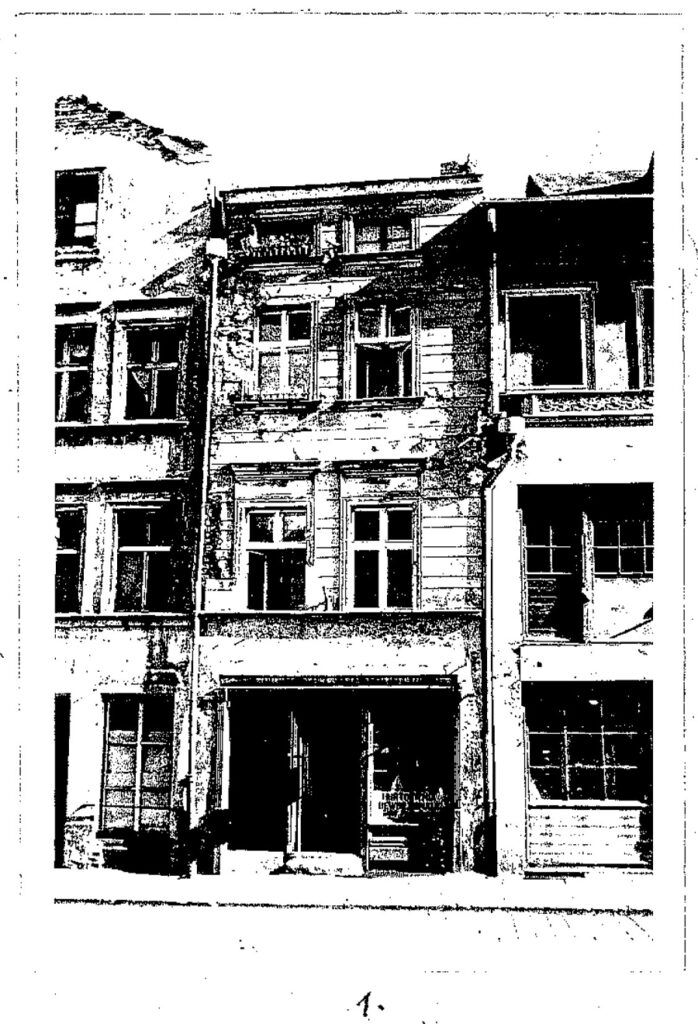
Documents dated on 1804 show that at that time the building was bricked and already had three aboveground floors. In years 1844-1887 there was a shoemaker’s workshop. In consecutive years the house was owned by a merchant and later, by a baker. In the 1920s there was a store with women’s clothes and a pharmacy. The documents available at Poznań archives confirm that the building had many owners and served various purposes throughout the centuries.
Fortunately, the second world war did not cause severe devastation – warfare at Poznań Citadel resulted in 3 percent damage of the house and it was renovated after the war. In years 1968-69 the building was occupied by the State Conservation Atelier. Several rooms were used as the Studio of Painting and Sculpture Conservation, other rooms housed the Studio of Scientific and Technical Documentation. In 1979 the building was handed over to Poznań National Museum.
In the 1990s the house was no longer occupied by anyone. It started to deteriorate, it became neglected and forgotten. This state changed in 2013 when it was bought by an architect, professor Sławomir Rosolski. At that time, a lot of scientific research and conceptual work was done, after which renovation works were launched. As a result, the building became beautiful and adapted to new forms of use. It preserved the original shape of the first and second floor, whereas the ground floor and the attic gained a new look.
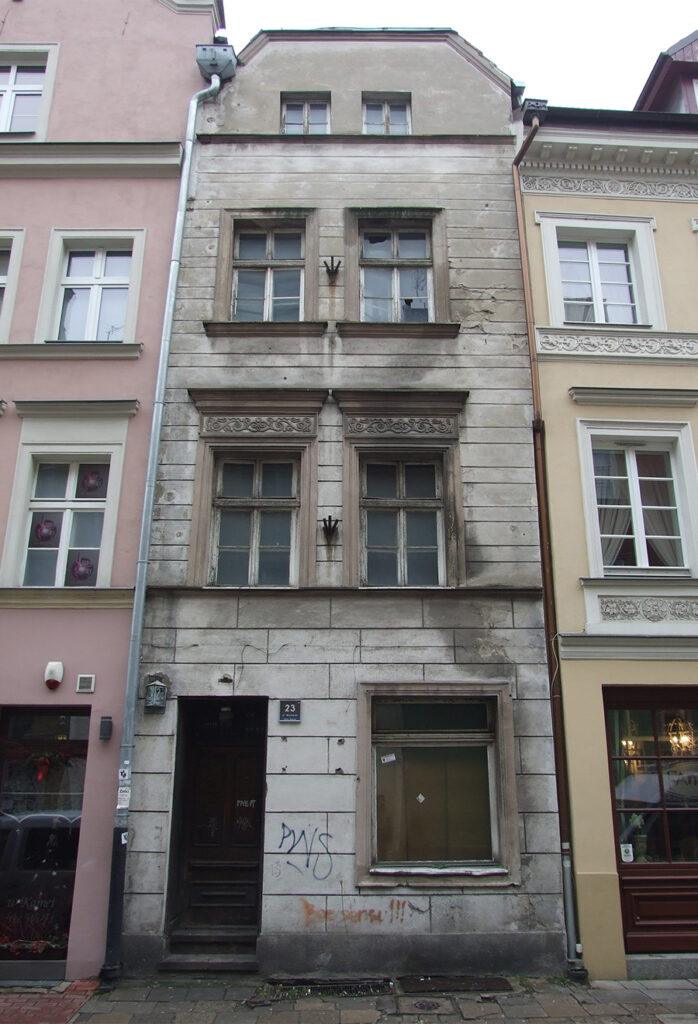
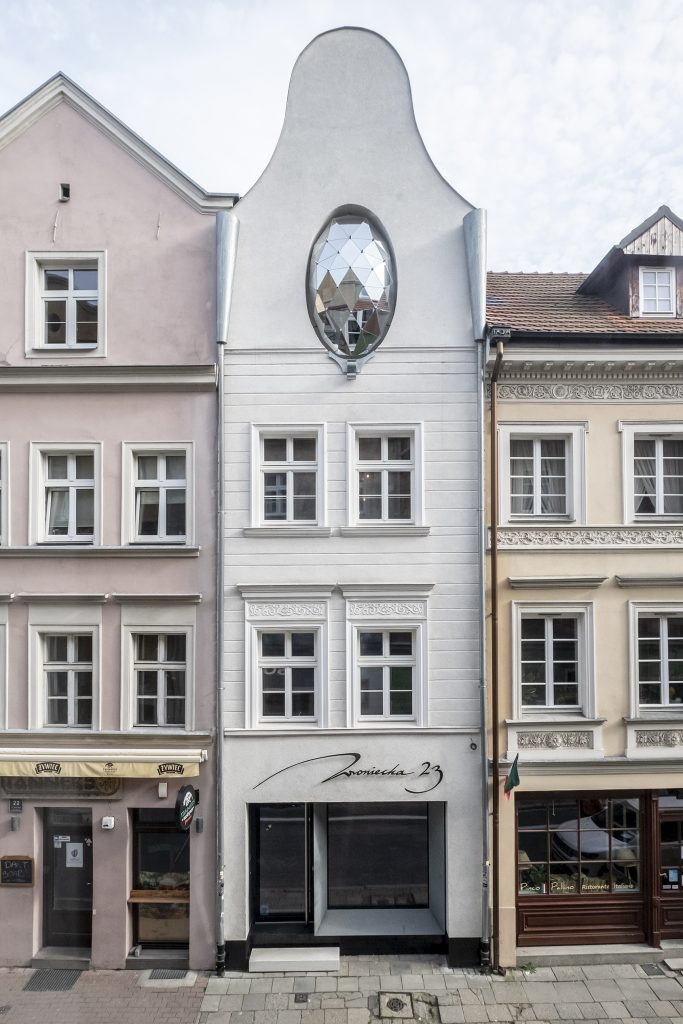
The building was insulated and plastered. The interior was restored and historic walls were uncovered from historical layers. The house was equipped with modern technical systems.
At present, Wroniecka 23 is a nearly zero-energy building that functions in accordance with assumptions of the sustainable development. It is the seat of the studio of architecture, urban planning, design and fashion. It is also a centre of science, research, didactics and implementation that cooperates with Poznań University of Technology. But above all that, it is evidence that a historic building may be useful, super-modern and environmentally friendly.